


Presentation of
the Beers
Presentation of
the Brewery
Cooking
with Beer
Contact and
Road map
 
  Activity area
 
  Growth
 
  Brewing process
 
  History


Brewing process

 
To brew beer, you need four basic ingredients:

  • Water: a pure and natural water with a hardness of no more than 20 French degrees is required. The brewery has its own water wells.
  • Malt: this is sprouted barley which is produced when the barley has absorbed 45 % moisture. The barley then sprouts for five days while spread out on a floor, which keeps the barley light and moist. The sprouting must be stopped at the right time, at which point we begin the drying process which makes the moisture content fall from 45 % to 5 %. Depending on the drying method, you get either a dark or pale malt, which will influence the color of the beer.
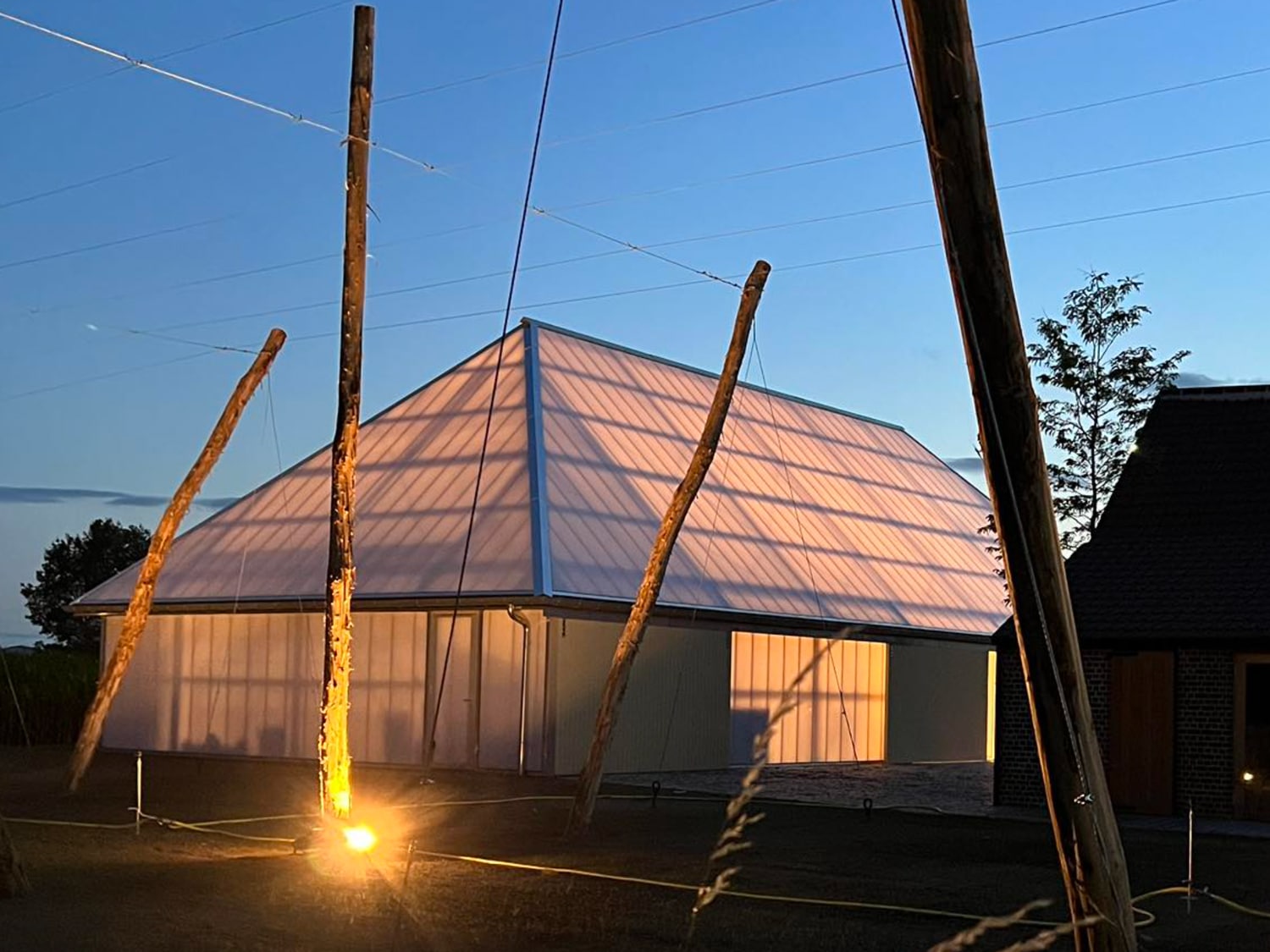
  • Hops: hops is a climbing plant of which only the female unfertilized flowers are used for brewing beer. Hops gives the beer its characteristic bitter taste and hoppy aroma.
  • Yeast: yeast is a living ingredient and therefore also the most delicate ingredient of beer. The yeast is produced in the laboratory of the brewery.
The brewing process is made up of five major steps:
 
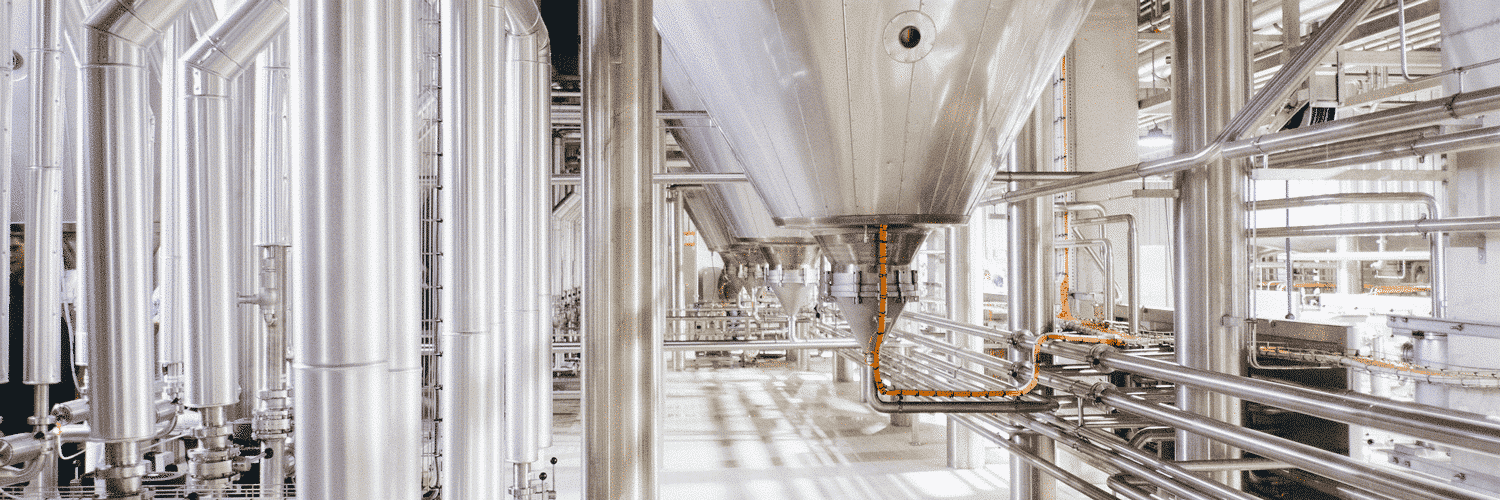
1. Everything begins in the brew house. Brewery Van Steenberge has a fully computer-controlled brew house that has a capacity of 100 hectoliters per brew. The brew house has five large aluminum tanks. In the first tun, also called the mash tun, water and malt are mixed together and heated to the saccharification temperature (from 62° to 72°C). Once this temperature has been reached, the beer is pumped over to the filter tank. This is a kettle with a flat perforated bottom that holds back the chaff of the malt and allows the liquid, which is called wort, to flow to the boiler. Here, the wort is boiled for 80 minutes during which time the hops is added. The wort then goes to the whirlpool where the hops is removed. At this point, the wort still has a temperature of 90° C and is immediately cooled to 8° C for low fermentation beers and to 18° C for high fermentation beers. It is not only the temperature difference that distinguishes the high and low fermentation beers; the yeast used also varies. Once cooled, the yeast is added to the wort and from that moment on, we have beer.


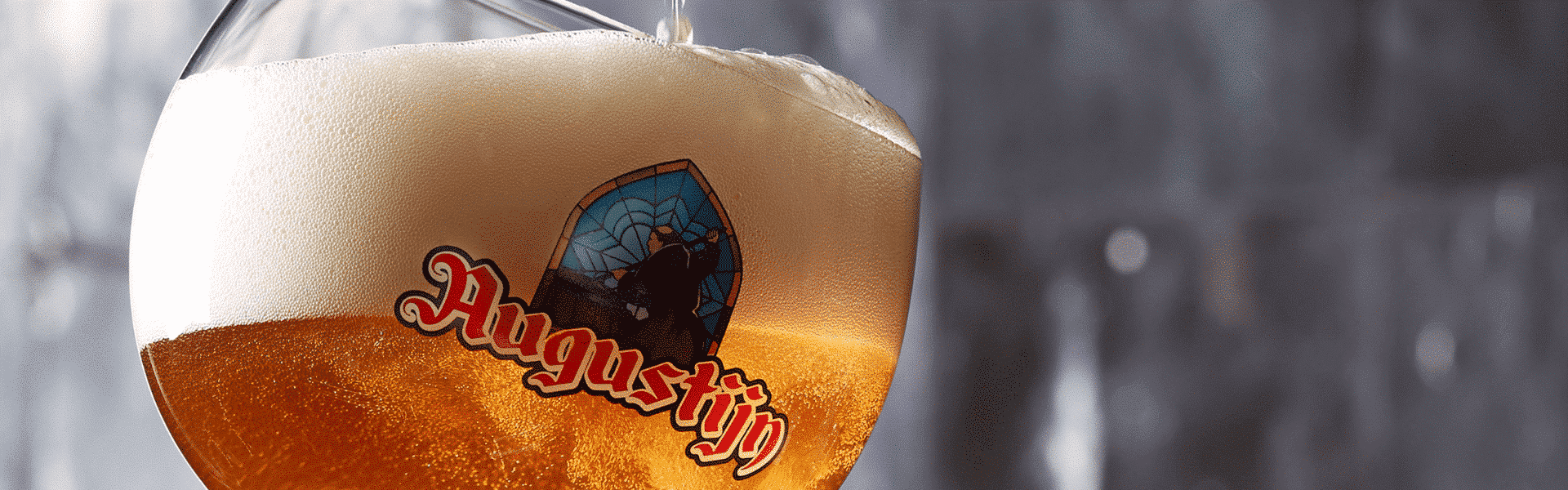
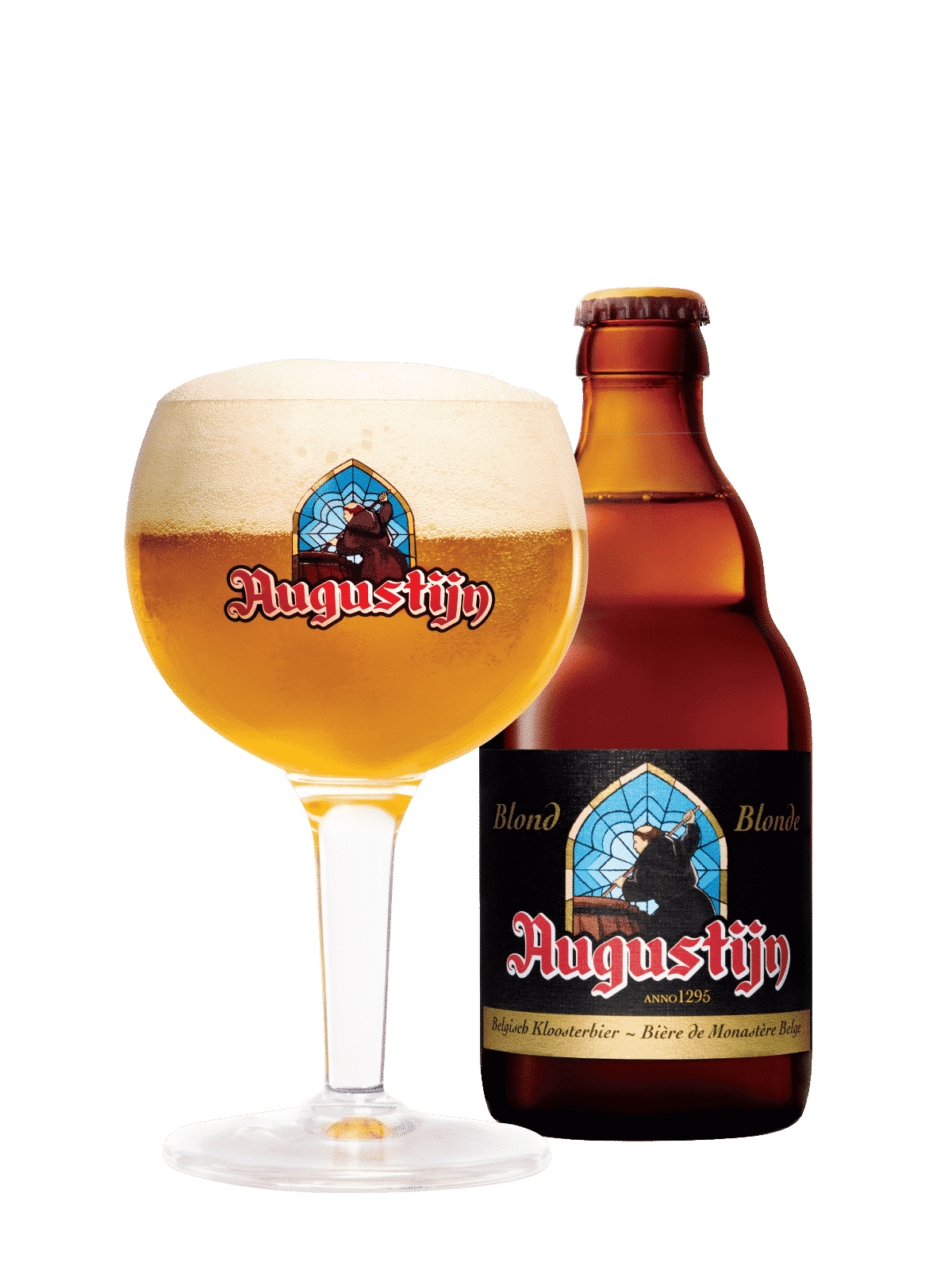
2. The yeast cellar contains 10 cylindroconical tanks with a total capacity of 2900 l. The job of the yeast is the following: the cooled wort contains sugar. The quantity depends on how much water and malt was used. The yeast, a living cell, "eats" the sugar and converts it into carbon dioxide and alcohol. On the first day, this happens slowly, on the third and fourth days it's fairly rapid and then on the tenth day, it has completely stopped. It is said that the beer has finished fermenting. All sugars are then converted into alcohol and carbon dioxide. For high fermentation beers (eg. Augustijn) the fermentation occurs at a temperature of 18 to 20 ° C, for low fermentation beers (eg. Sparta Pils, Celis White) it occurs at a temperature of approximately 8° C. After the yeast cellar comes the ageing cellar, which is where the beer rests. It matures there for approximately 4 to 6 weeks and undergoes a second very slow fermentation, which is in fact a maturing of the beer.
 
3. The beer is actually ready now, but the critical consumer wants a clear beer so the beer has to be filtered. It first goes through a Kieselghur filter. The beer is then filtered through a plate filter. The low fermentation beer is now ready to be bottled and packaged. High fermentation beer is filtered in the same way, but when high fermentation beer is brewed with secondary fermentation (as is still the case at Van Steenberge), a small amount of yeast and sugar is added before the beer is bottled. This gives the beer a more refined flavor and makes it virtually imperishable, without pasteurization.
 
4. The penultimate step is bottling the beer. In 2000, a complete new bottling plant was set up with a capacity of 20,000 bottles per hour. In addition to this, there is also a keg filling machine, which can fill some 90 kegs per hour.
 
5. Finally, the high fermentation beer, to which yeast and sugar were added prior to bottling, has to undergo secondary fermentation in one of the 7 warm rooms. After approximately 14 days, the beer has finished fermenting and the yeast remains at the bottom of the bottle or keg.
 
6. The beer is now ready for consumption. So it takes about a month and a half before the beer is ready for the end client.